
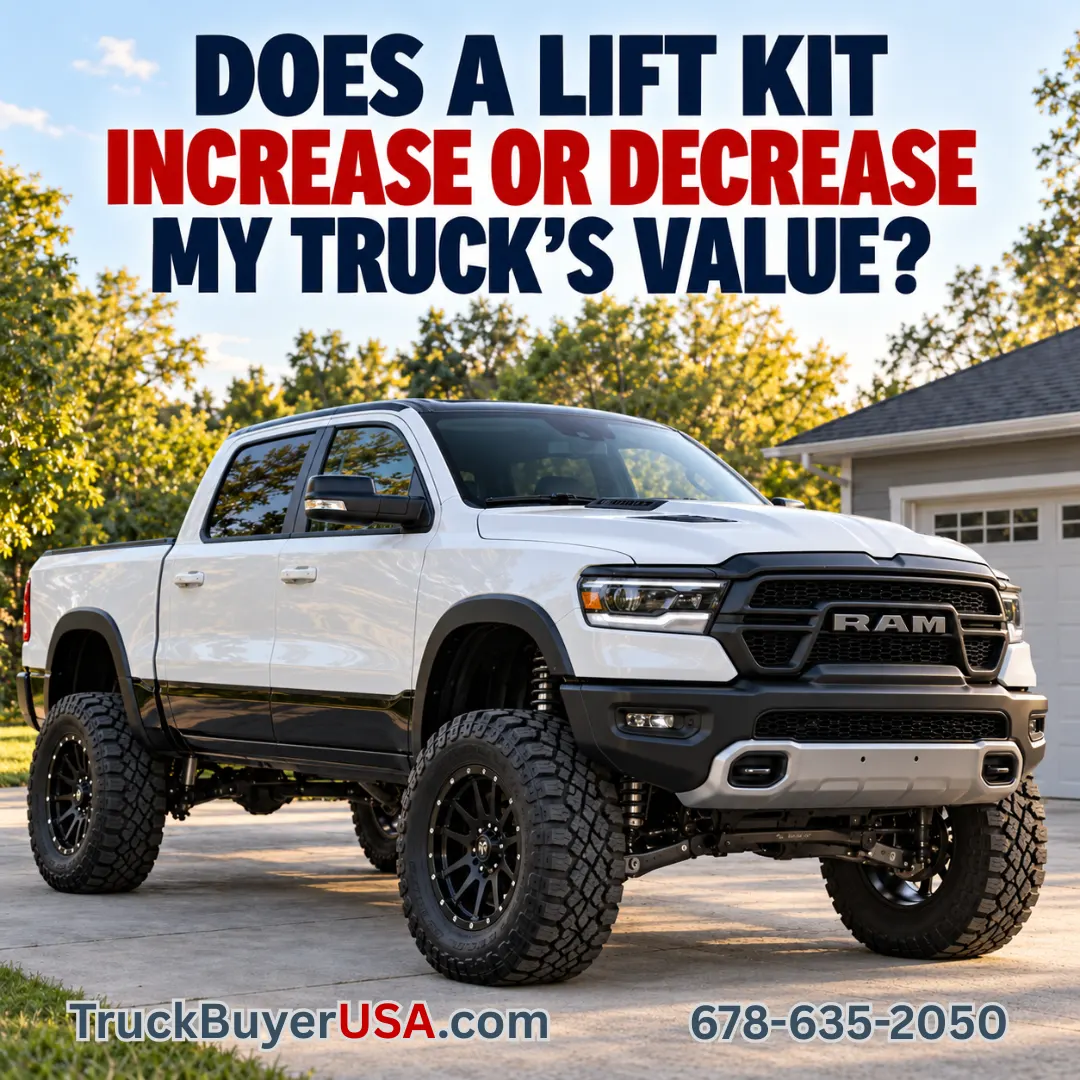
That lift kit made your truck taller. It may have made the tires bigger, the stance tougher and the whole pickup more enjoyable to own. But when you’re ready to sell, does it make the offer bigger, too?
Sometimes—but a lift kit can also reduce your truck’s value or narrow the pool of interested buyers. The result depends on the setup, installation quality, overall condition and whether the next buyer actually wants a lifted truck. The money you spent customizing your pickup is not automatically money you can recover when selling it.
Your Upgrade Is Someone Else’s Decision
A buyer looking for a modified pickup may appreciate a well-executed lift. Someone who needs easy entry, predictable handling or clearance inside a parking garage may see the same modification as a drawback.
Even among enthusiasts, preferences differ. One buyer wants a modest suspension lift with practical tires. Another wants a taller build. Neither necessarily wants to pay extra for the setup you chose. That makes a lifted truck more specialized. You’re selling the truck’s condition and equipment, along with modifications that buyers will judge individually.
Installation Quality Can Make or Break the Conversation
A lift deserves more scrutiny than a quick look at how the truck sits. Depending on the design and height, suspension modifications can change steering and driveline geometry. Larger tires may introduce clearance issues or affect gearing, braking demands and speedometer accuracy. The important question is whether the complete setup was properly planned and installed.
Rubbing tires, wandering steering, unusual vibration and uneven tire wear give buyers reasons to investigate further. A shiny truck with unresolved problems is still a truck with problems. Documentation helps. Gather the kit manufacturer, installation invoice, alignment records and details of supporting modifications. A professional installation provides useful evidence, although it does not guarantee that the setup remains trouble-free.
What Can Help—or Hurt—a Lifted Truck’s Appeal?
What Buyers Evaluate |
Why It Matters |
|---|---|
Kit design and components |
Helps buyers understand what was changed |
Installation documentation |
Makes the work easier to assess |
Steering and alignment |
Pulling, looseness or uneven wear can raise concerns |
Tire fitment |
Rubbing or inadequate clearance may require correction |
Ride and driveline behavior |
Vibration and unusual noises warrant investigation |
Practical usability |
Entry height, garage clearance and everyday needs affect interest |
A Lift Does Not Increase Factory Capability
A taller stance does not automatically increase payload or towing capacity. Neither do larger tires or a more aggressive appearance. Buyers who haul or tow need to evaluate the truck’s actual ratings and the suitability of its modifications. Avoid advertising increased capability unless you have reliable documentation supporting the specific claim.
Also, distinguish between a body lift, suspension lift and leveling kit. Calling every modification a “six-inch suspension lift” because the truck looks tall can create confusion before an inspection even begins.
Should You Return It to Stock Before Selling?
Get an offer first. Removing a lift can require more than reinstalling a few original parts. Labor, replacement components, alignment and correcting previous modifications can turn the project into another substantial expense.
Keeping the truck modified may make sense if the setup is sound. Returning it to stock may deserve consideration if the modifications create problems or limit interest. Compare the actual costs before spending more money chasing an uncertain increase in value.
Let TruckBuyerUSA Evaluate the Whole Truck
TruckBuyerUSA buys all sorts of lifted pickups, so you don’t have to assume modifications must come off before requesting an offer. Provide accurate details about the lift, tires, installation and any known issues.
You paid to build the truck you wanted. Now find out what a buyer will pay for the truck you’re selling. Let TruckBuyerUSA.com evaluate it before your next modification becomes another selling expense.