
What Sellers Need to Know!
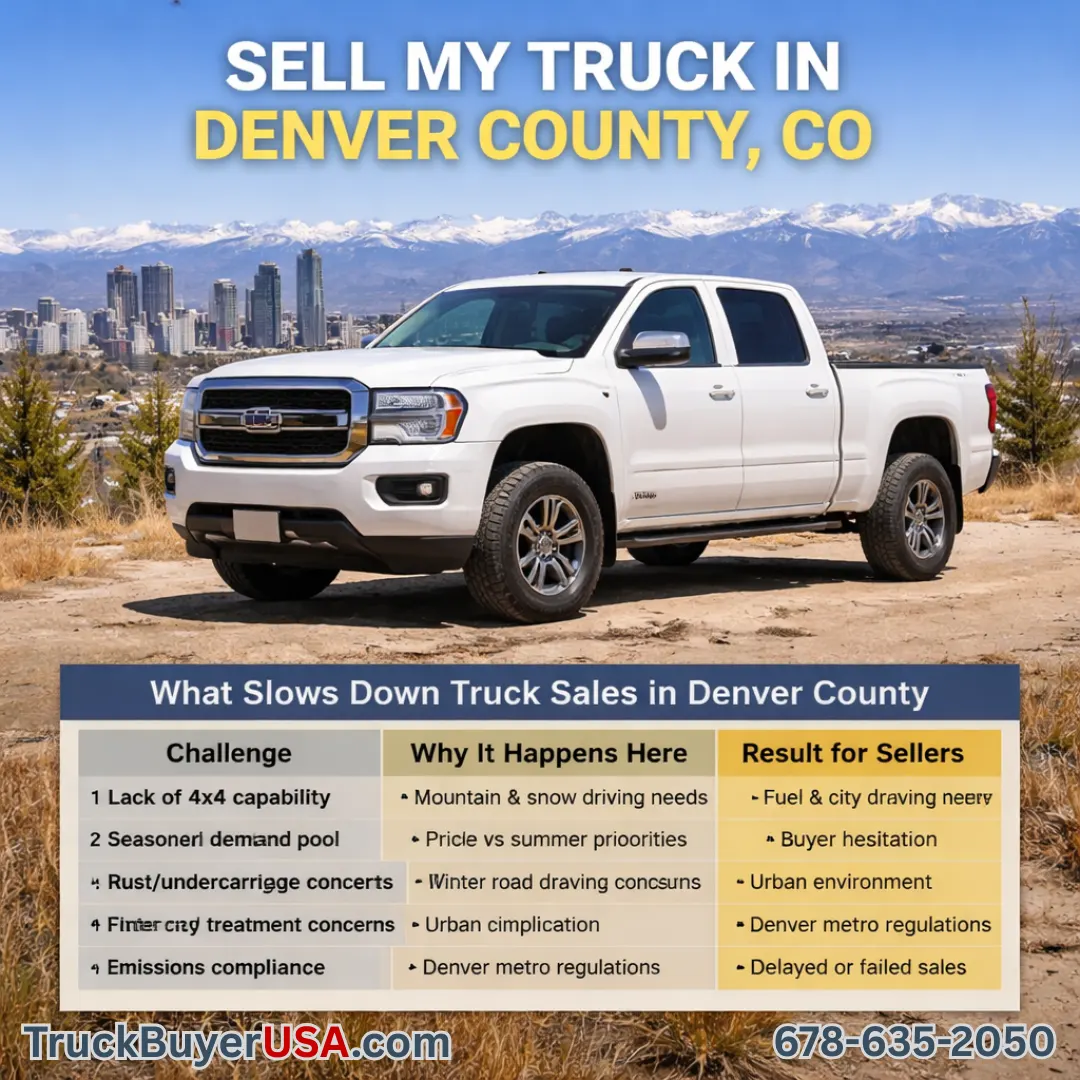
If you’re searching “sell my truck in Denver County, CO,” you might assume it’s an easy win. Trucks are everywhere in Colorado, from job sites to mountain roads to weekend adventure trips. But Denver County brings a very specific mix of urban demand, outdoor lifestyle expectations, and regulatory factors that can make selling your truck more complicated than expected.
Denver isn’t just a truck market, it’s a lifestyle-driven truck market. Buyers here aren’t only thinking about commuting or work. They’re thinking about snow, mountains, towing, camping, and year-round versatility. That means your truck isn’t just being judged on condition, it’s being judged on capability.
The first major factor is 4x4 and drivetrain expectations. In Denver, 4x4 or AWD isn’t a bonus, it’s often expected. Trucks without it can still sell, but the buyer pool shrinks fast, especially during fall and winter months. Ground clearance, tires, and overall readiness for mountain driving matter more here than in most counties.
Next is seasonality. Truck demand in Denver shifts with the seasons. As winter approaches, demand increases, especially for trucks equipped for snow and mountain conditions. In spring and summer, buyers focus more on recreational use like towing campers, boats, or off-road capability. Timing your sale in Denver can directly impact your price.
Another major factor is rust and undercarriage condition. Colorado uses road treatments in winter, and buyers are very aware of it. Even in Denver County, trucks are often inspected underneath for signs of corrosion or long-term wear. Sellers who overlook this often face last-minute negotiation or lost deals.
Then there’s fuel cost and urban practicality. While trucks are popular, Denver is still a dense, growing city. Some buyers hesitate on larger trucks due to parking, fuel costs, and daily drivability. Half-ton trucks tend to move faster than heavy-duty models unless they’re clearly set up for towing or work use.
Emissions and registration also play a role. Colorado has emissions requirements, especially in the Denver metro area. A check engine light or failed emissions test can immediately slow down a sale. Buyers want a truck that’s ready to transfer and register without extra steps.
What Slows Down Truck Sales in Denver County
Challenge |
Why It Happens Here |
Result for Sellers |
|---|---|---|
Lack of 4x4 capability |
Mountain & snow driving needs |
Smaller buyer pool |
Seasonal demand shifts |
Winter vs summer priorities |
Price fluctuations |
Rust/undercarriage concerns |
Winter road treatment exposure |
Buyer hesitation |
Fuel & city driving concerns |
Urban environment |
Slower demand for larger trucks |
Emissions compliance |
Denver metro regulations |
Delayed or failed sales |
Another reality in Denver County is buyer knowledge. Many truck buyers here are experienced, they know what they want, what to look for, and what issues cost money. That makes negotiations more direct and often less forgiving.
Private sales can also become time-consuming. Between scheduling around work, weather, and traffic, plus buyers wanting detailed inspections, deals can take longer than expected to finalize.
Dealership trade-ins offer convenience, but like most markets, that convenience comes at a price. Dealers factor in resale demand, condition, and how well the truck fits the local market. Trucks without 4x4 or with visible wear often receive lower offers.
At some point, many sellers realize that listing the truck isn’t the hard part, closing the deal is.
That’s where working with a truck-focused buyer can simplify the process. TruckBuyerUSA.com specializes in trucks specifically, meaning evaluations are based on real-world use, capability, condition, and demand...not just surface-level factors.
Instead of dealing with seasonal swings, selective buyers, and extended negotiations, sellers receive clear, as-is evaluations and a direct path to closing.
Selling a truck in Denver County doesn’t have to be unpredictable. When you’re ready to move forward without the delays and back-and-forth, choosing a buyer who understands both trucks and the market can make all the difference.